Every comparison article for these three tools reads the same way. A feature table. A pricing table. A "best for" label at the end. Ahrefs = backlinks. SEMrush = all-in-one. Mangools = budget-friendly.
You've read that article. Probably three times. You're still not sure which one to buy.
Here's why those articles don't help: they describe features. They don't show decisions. Knowing that Ahrefs has "the largest backlink index" means nothing until you see what that index actually reveals when you open a real backlink profile and need to make a call.
I use all three tools. Daily. On real client campaigns. Not because I love paying for three subscriptions — because each one does something the other two don't do as well. This article shows you what that looks like in practice.
I'm going to take one real keyword, type it into all three tools, and show you — side by side — what each one reveals, what each one misses, and which one gave me the best answer for each specific job.
The keyword: "digital marketing course Kerala"
I chose this because it's a keyword I've actually targeted. I know the competitive landscape. I know what ranks and why. That context matters — because a tool comparison without context is just screenshots of dashboards.
Round 1: Keyword Research — Finding whether it's worth targeting
This is the first question for any keyword: is it worth my time?
Ahrefs Keywords Explorer:
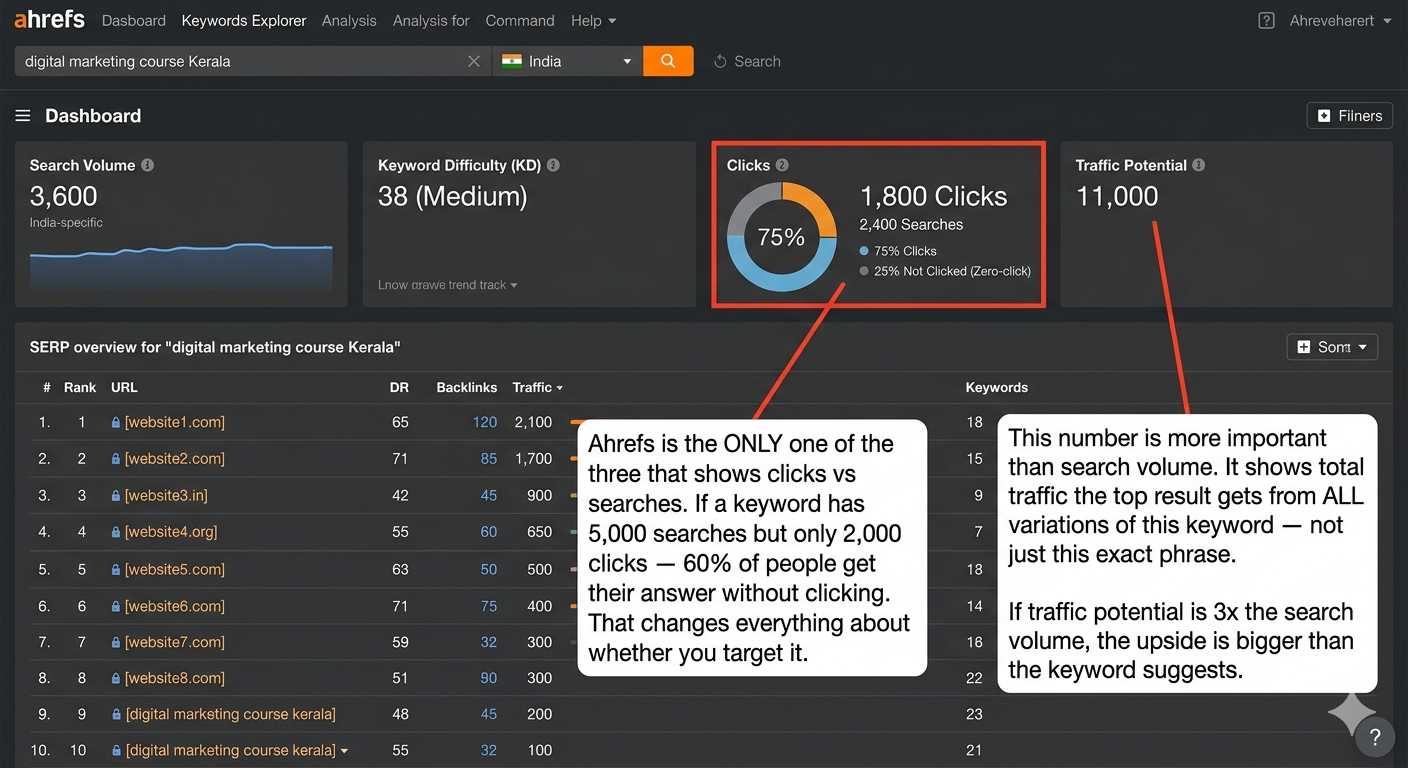
SEMrush Keyword Magic Tool:
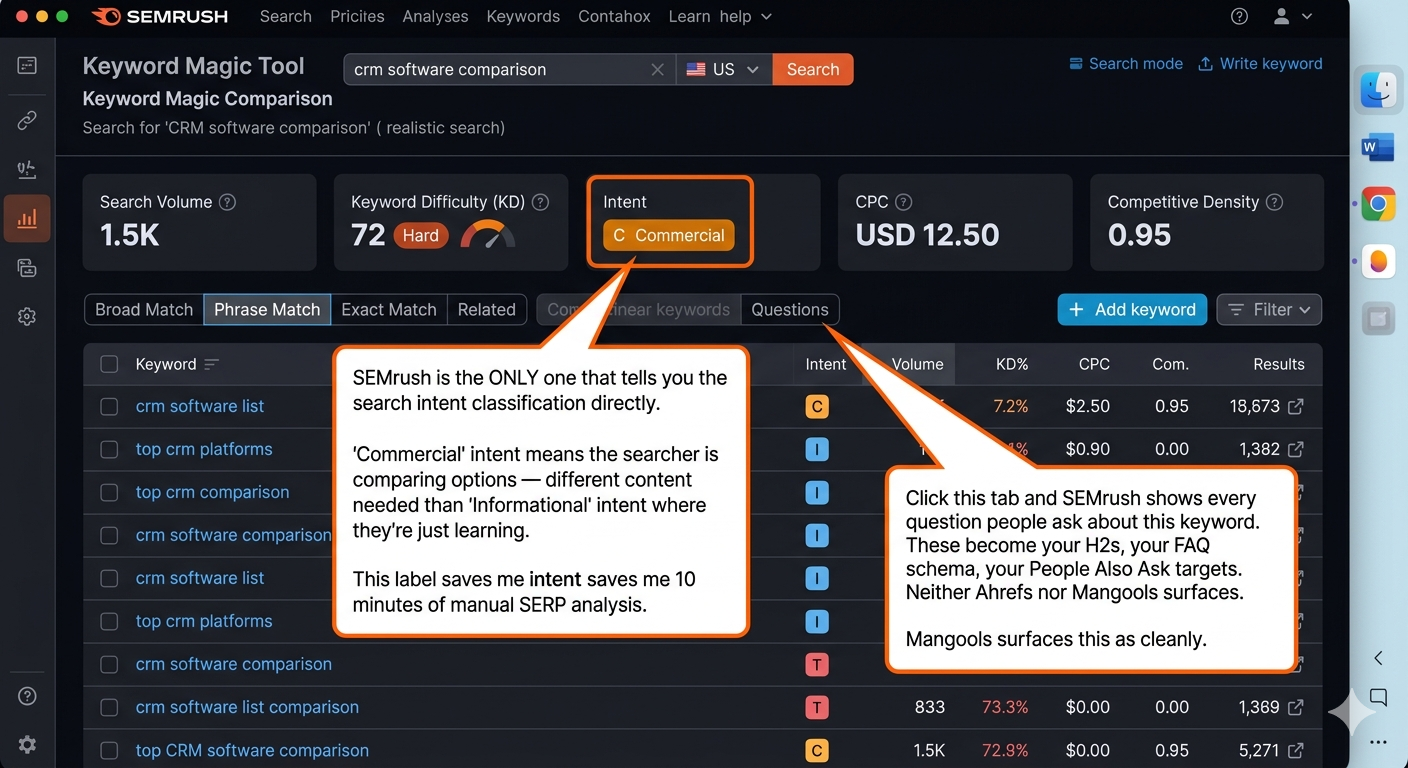
Mangools KWFinder:
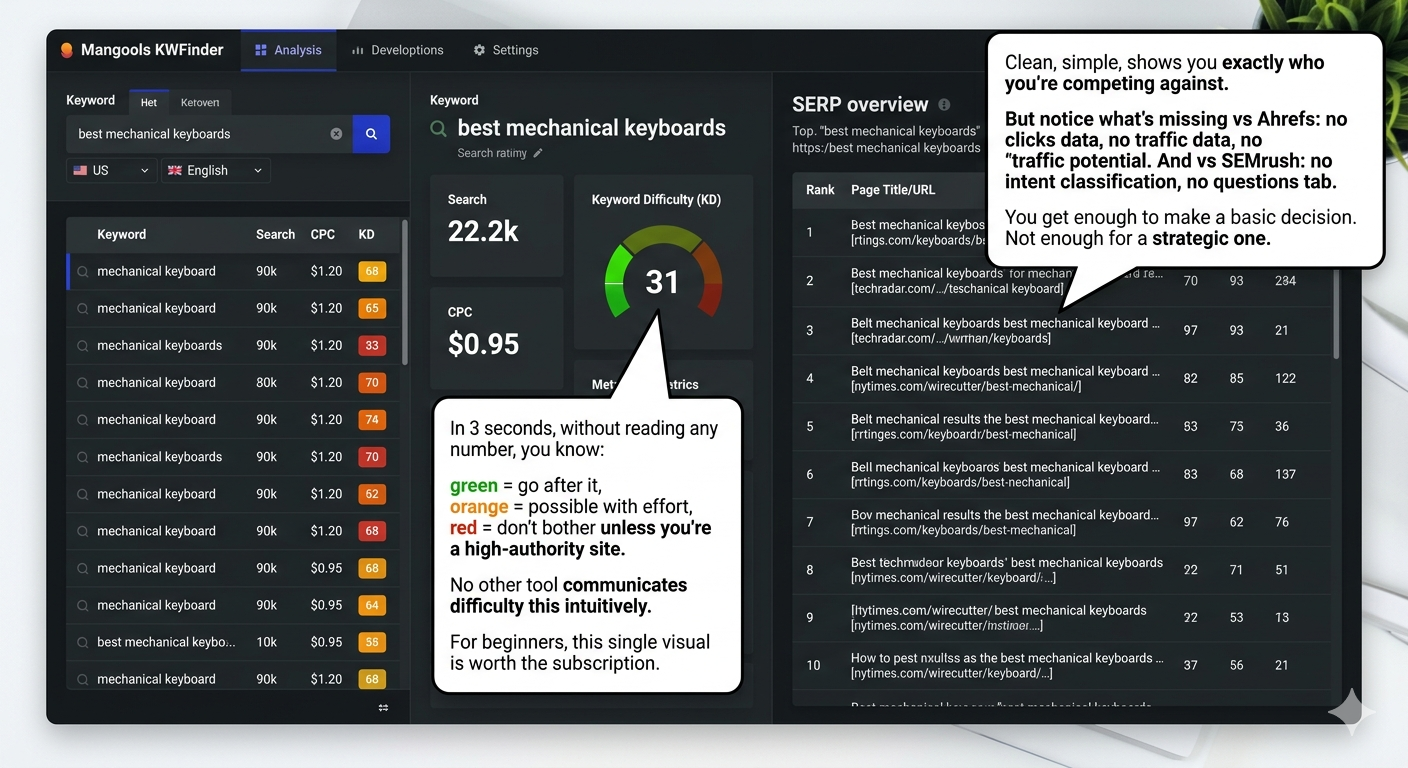
Round 1 verdict:
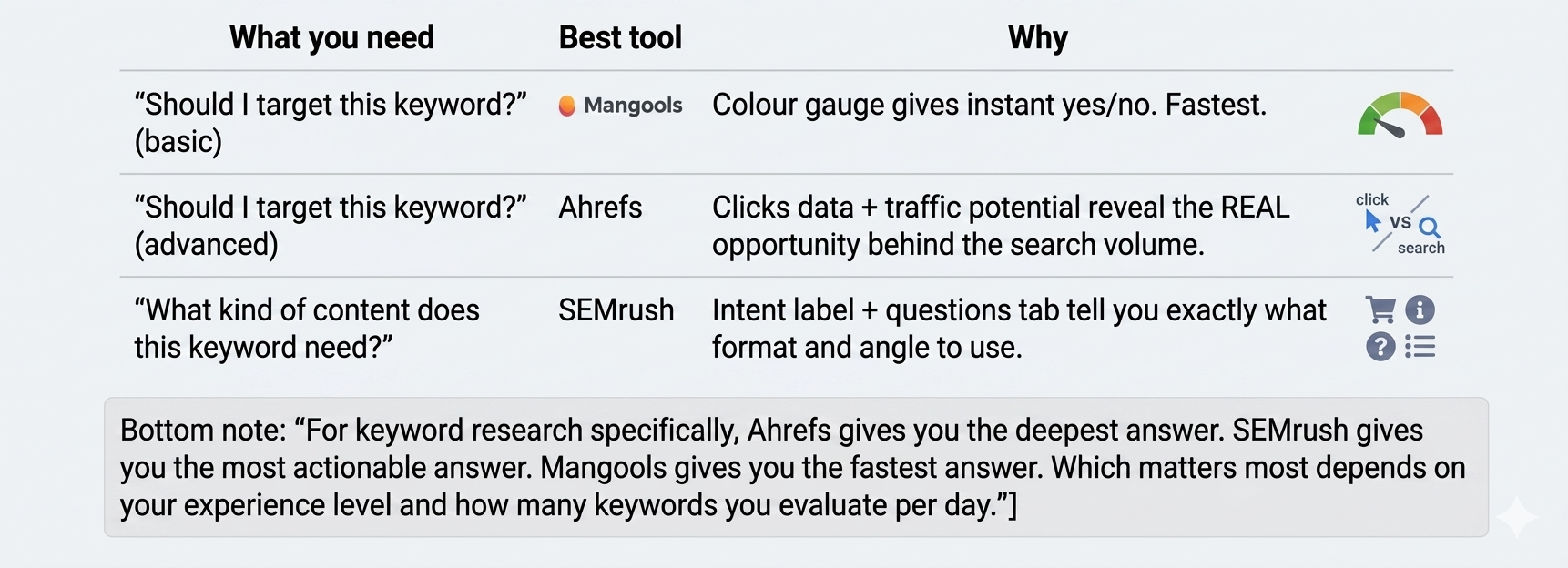
Round 2: Competitive Analysis — Understanding who you're fighting
Same keyword. Now I want to know: who ranks and why? What are they doing that I need to do better?
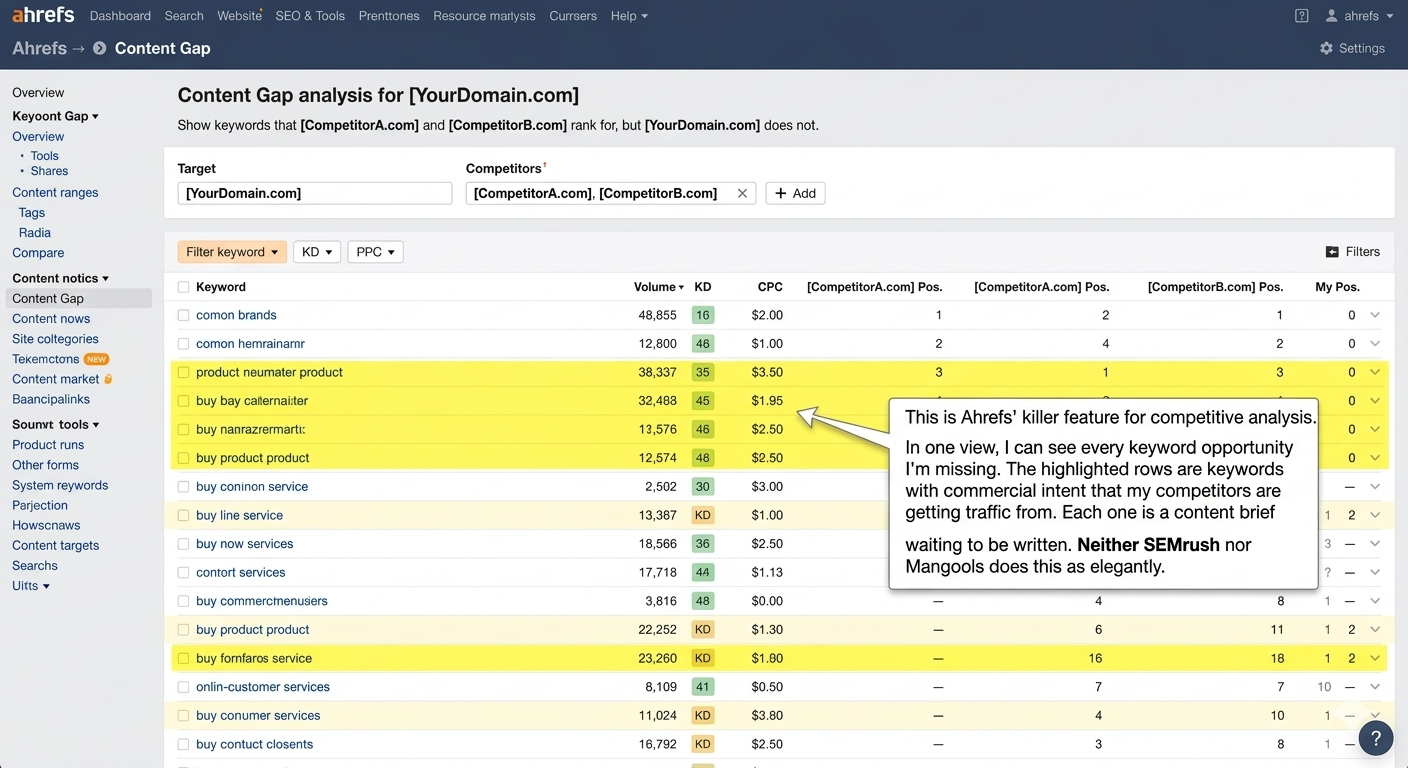
Ahrefs Content Gap:
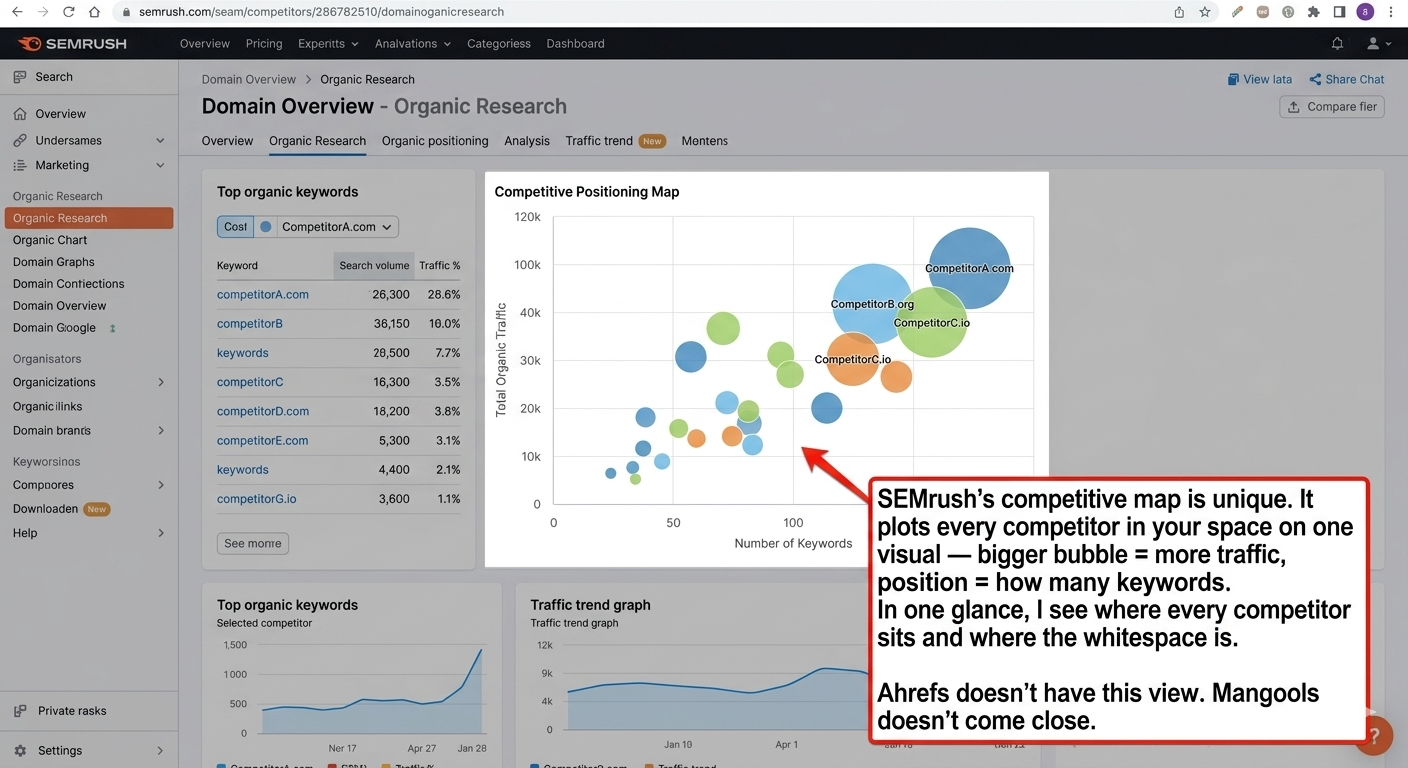
SEMrush Domain Overview:
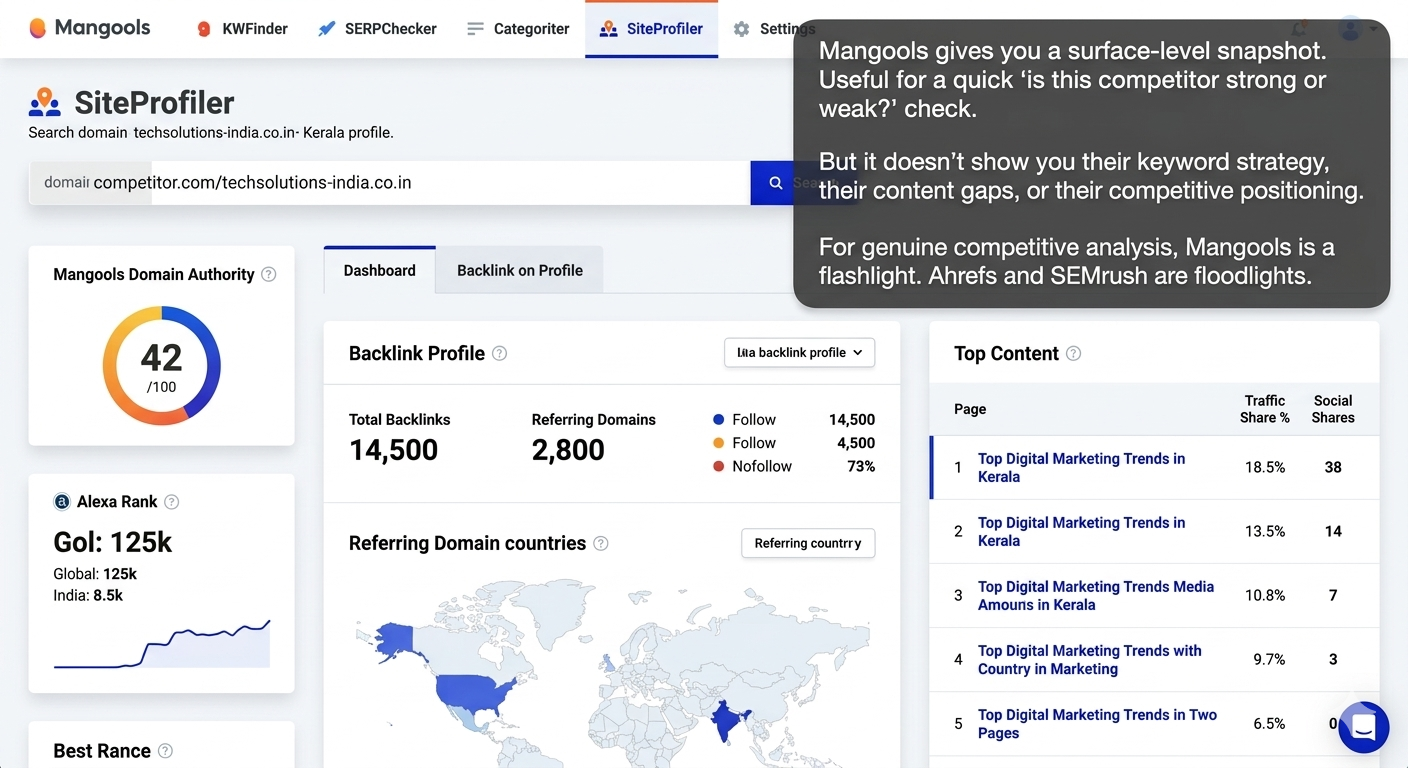
Mangools SiteProfiler:
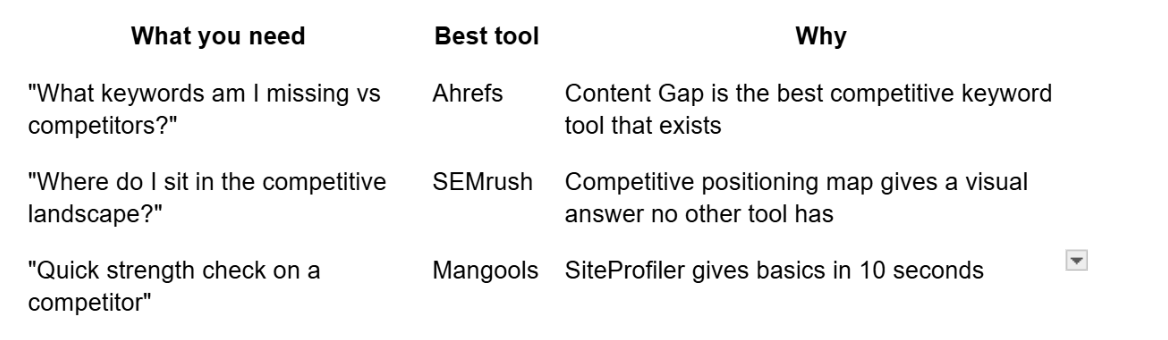
Round 2 verdict:
Round 3: Backlink Analysis — Understanding who links to what
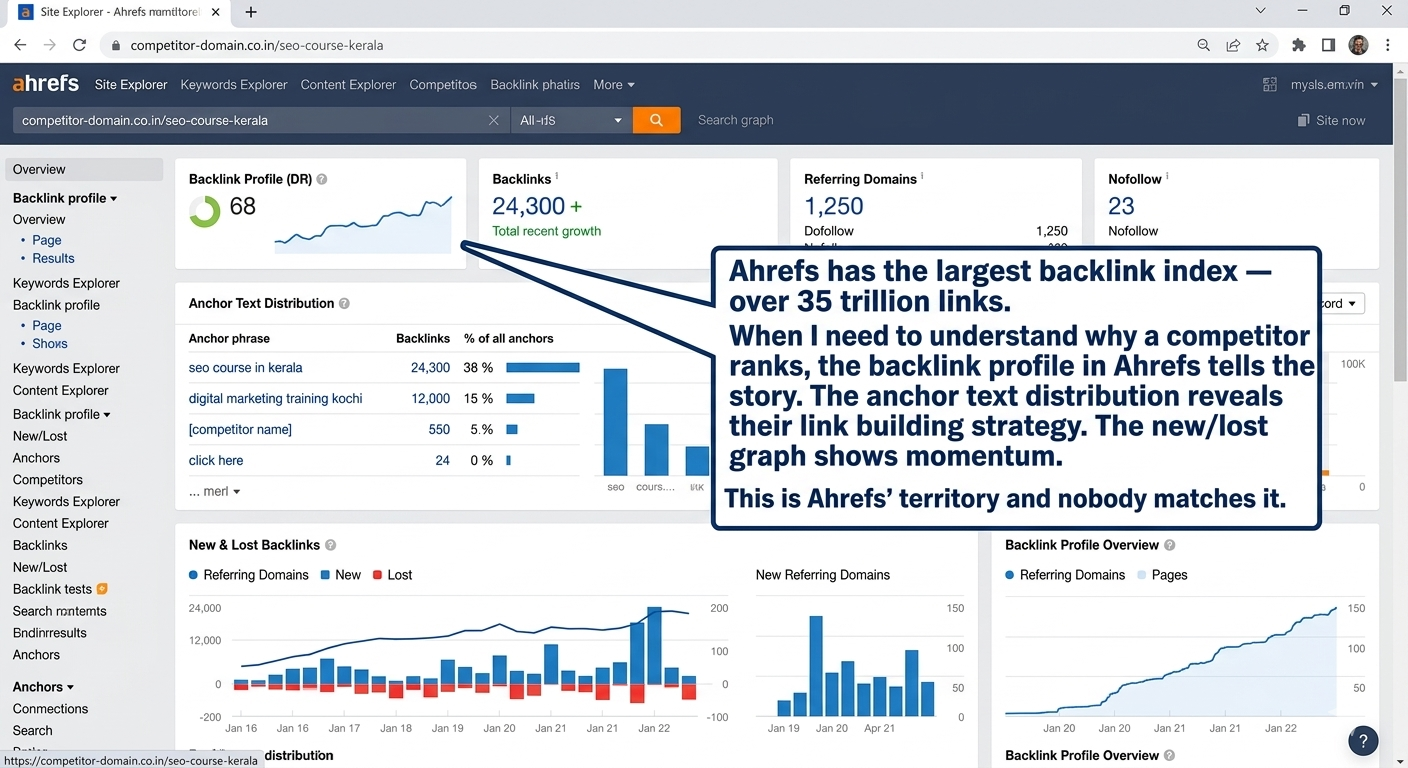
Ahrefs Site Explorer:
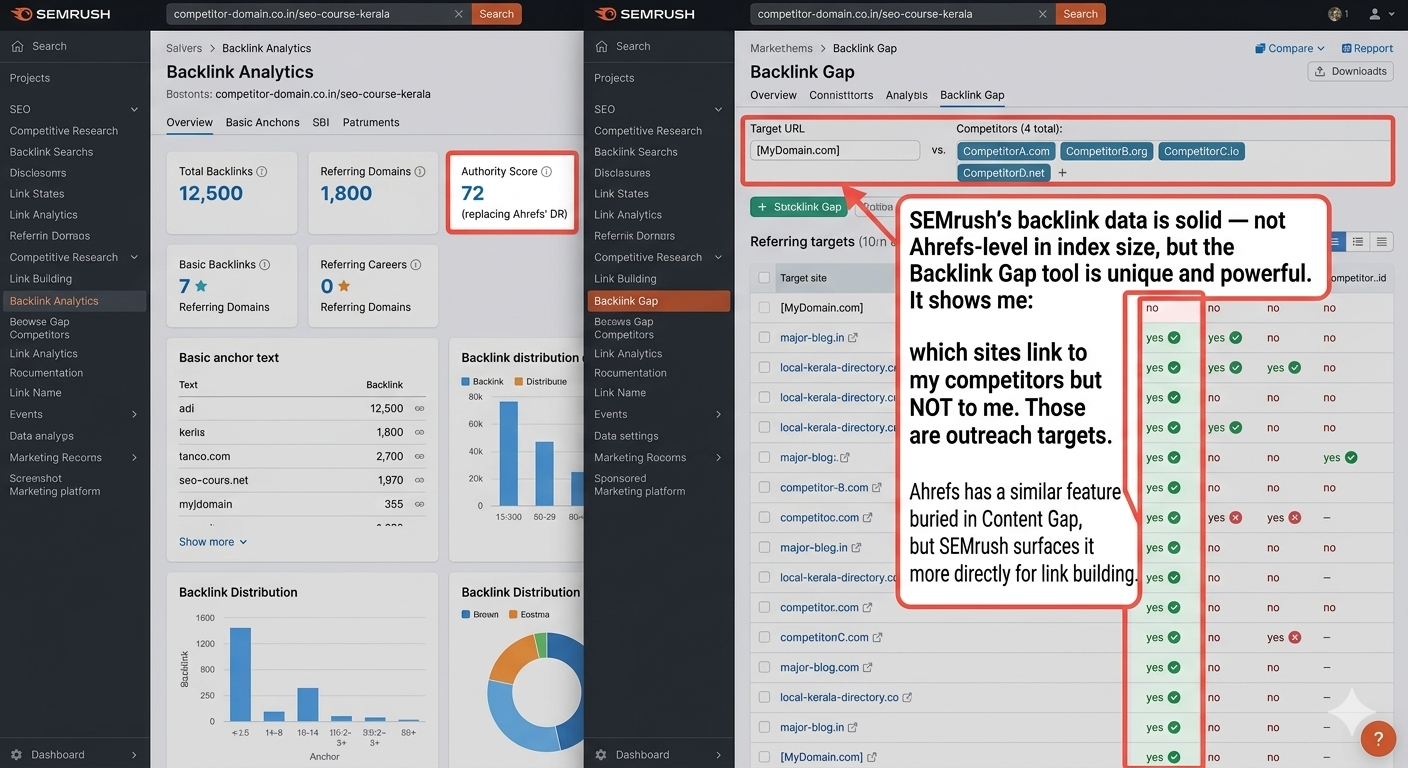
SEMrush Backlink Analytics:
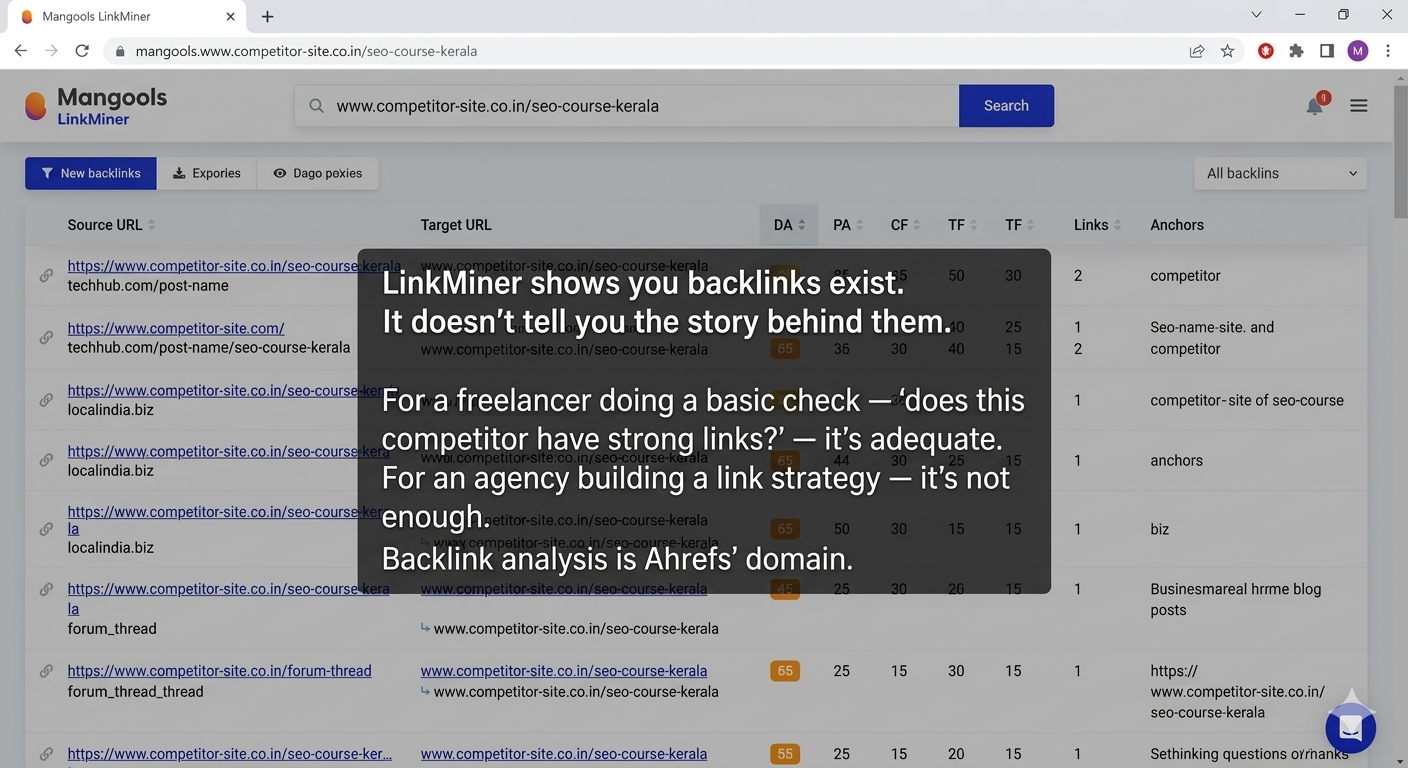
Mangools LinkMiner:
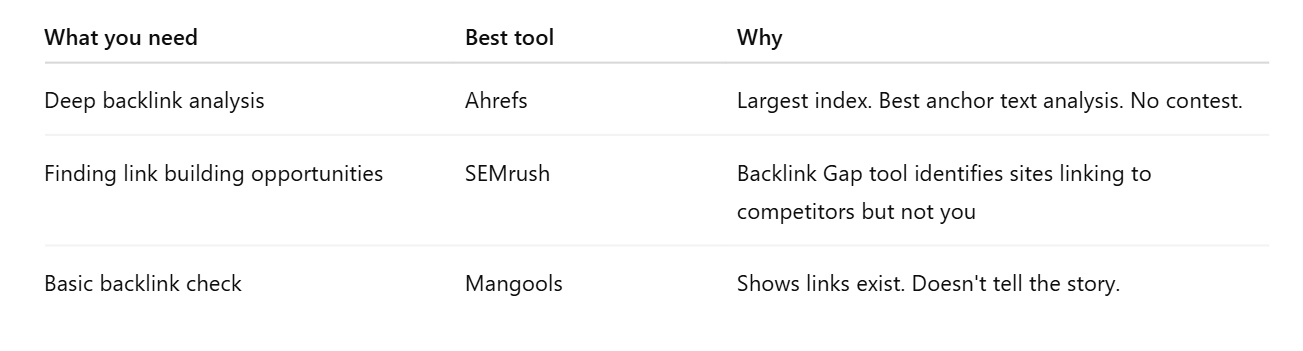
Round 3 verdict:
Round 4: Rank Tracking — Monitoring keyword positions daily
SEMrush Position Tracking:
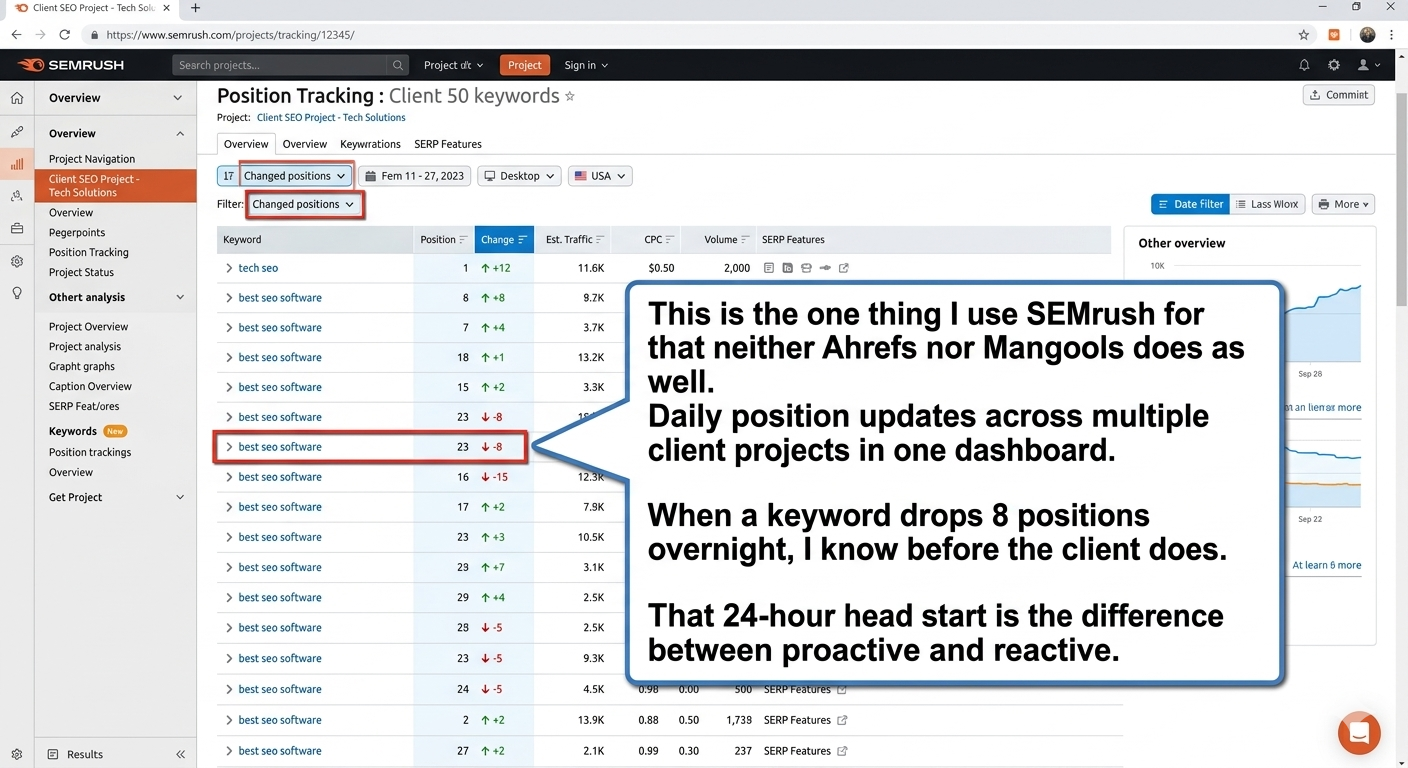
Ahrefs Rank Tracker:
Works well. Updates regularly. But managing multiple client projects and getting a quick "what changed today" view isn't as smooth as SEMrush's dedicated position tracking interface.
Mangools SERPWatcher:
Clean and simple. Tracks positions with a nice "Dominance Index" metric. Good for freelancers tracking one or two projects. Not built for agency-scale multi-project monitoring.
Round 4 verdict: SEMrush wins for rank tracking. Especially at scale.
Round 5: Pricing — What you actually pay
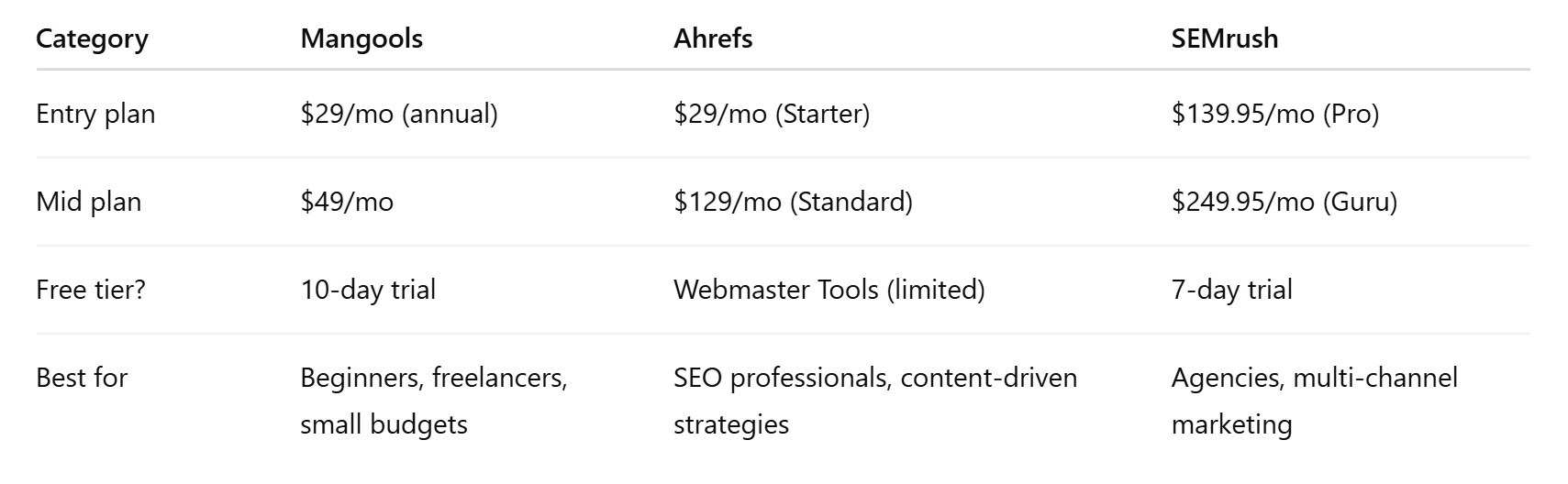
Mangools is ~5x cheaper than SEMrush. For a student or freelancer, that gap matters more than any feature comparison. Start with Mangools. Graduate to Ahrefs when keyword research demands depth. Add SEMrush when you manage multiple clients and need daily tracking + competitive mapping.
The Decision Framework — Not "which is best" but "which is best for YOU"
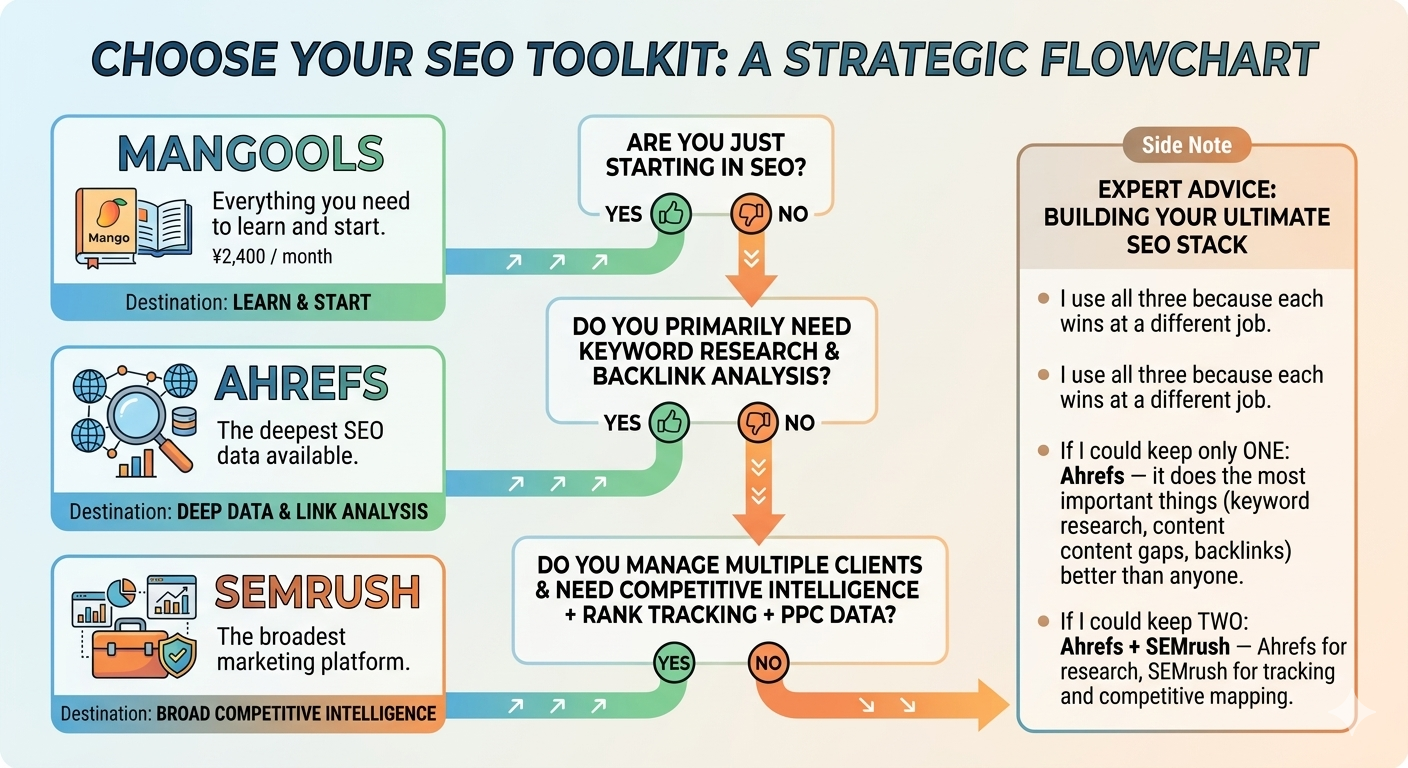
I've spent years inside all three dashboards. The honest truth: the tool matters less than the thinking you bring to it. Mangools in the hands of someone who understands search intent and how Google makes ranking decisions outperforms Ahrefs in the hands of someone who just exports keyword lists.
Learn the thinking first. The tool amplifies what you already understand. It doesn't replace understanding.
If you want to learn how to actually USE these tools for decisions — not just navigate the interface — that's what WizGrowth teaches. Through real campaigns, not demo screenshots.